
Eric Dane (McSteamy on Grey's Anatomy) and what ALS asks us to hold
- ALS Double Play
- Feb 23
- 4 min read

I still remember what it feels like when ALS becomes real.
Not as a headline. Not as a story about someone else. But as something that enters your life and changes the way you breathe, the way you plan, the way you look at time.
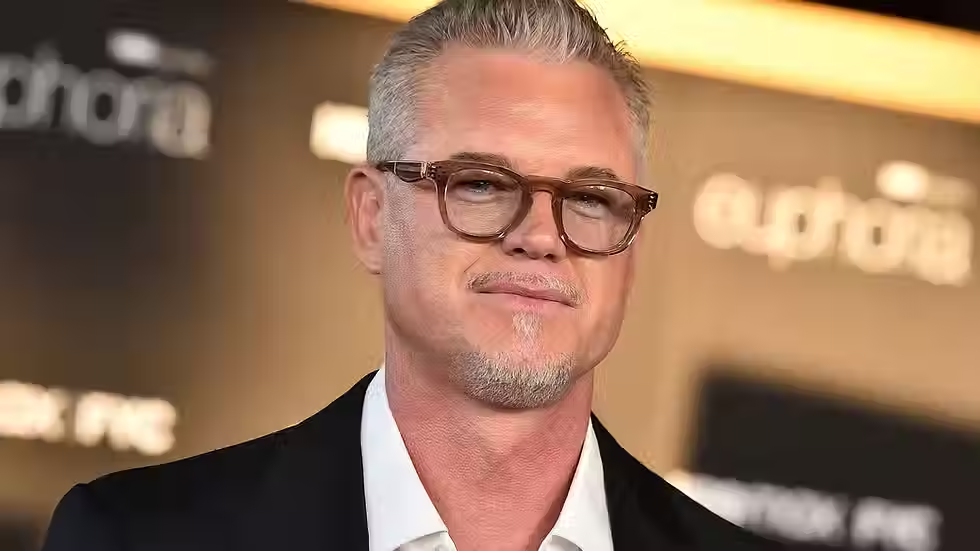
When Eric Dane chose to share his ALS diagnosis, it was an act of courage and generosity. He did not have to do it. He could have stayed private. Instead, he let people in, and in doing that, he helped others feel less alone.
I am grateful to him for that.
I am also grateful for the awareness he brought to ALS in his public appearances after diagnosis, and then especially through his character in the TV show Brilliant Minds. ALS is still misunderstood. People still think it is rare, or that it only happens to certain kinds of families. It does not. When someone well known speaks about ALS, it widens the circle of understanding. And sometimes that is how compassion turns into action.
After Eric’s passing, so much sadness has been shared publicly. Grief from his family and friends has been carried in the media, and it is heartbreaking to witness. There is a kind of ache that comes from watching a family lose someone they love, and seeing how many people wished for a different ending.
And for people living with ALS, and the people who love them, this kind of public goodbye can land differently.
It can bring up anticipated grief.
Because many people living with ALS are watching all of this with a quiet knowing that this disease is coming for them too. Not as a metaphor. As a reality they are already living with. It is not only sadness for someone else’s loss. It is the pain of seeing the shape of your own future reflected back at you.
One of the most tender things Eric allowed to be shared is a goodbye message, a last words video to his daughters, Billie and Georgia. If you choose to watch it, I hope you do it gently. It is intimate. It is loving. It can also be a lot to carry.
In that message, he shared four things he learned. I have been sitting with them, not as a list to admire, but as reminders for how we can show up for people living with ALS, and how we can live more honestly right now.
Live now.
It sounds simple until you try. Being present is hard, especially in a world that keeps pulling our attention away.
But many people living with ALS do not get to live in the someday. They live in the right now.
So if you are with someone living with ALS, stay present with them. Put your phone away. Slow down. Let them set the pace. Listen without rushing to fix things. If you do not know what to say, say that. Presence is not performance. It is a gift.
Fall in love.
Not only with a person, but with something that gives you purpose.
Have passion for something and live for it. Give yourself a reason to keep going. People living with ALS still want meaning, laughter, connection, and joy. ALS does not erase personhood. It does not erase love.
If anything, it makes love more urgent.
Choose your people wisely.
ALS teaches you very quickly who shows up.
Surround yourself with people you can count on, and people who make you better. Then show them you care. Do not be shy about it. Say it out loud.
We are all so separated today, even while we are constantly connected. We are on devices, in our own lanes, in our own worlds. And people, especially people facing something hard, need to know you care and that you are there.
So check in. Follow through. Show up. It matters more than you think.
Fight.
Fight through your challenges. Do not give up.
Many people living with ALS remain completely themselves mentally while their bodies change, which is part of what makes ALS so painful and so cruel. They know what is happening. They still feel. They still love.
And many have a fighting spirit. They want to live. They want time. They want moments.
We should take a page from this.
Life is precious. Challenges are real, but they are still challenges we can work through. With help. With community. With grit. With love. We can work through them, with them, around them. We can change our world, one choice at a time.
Eric talked about resiliency, and that word matters.
Resiliency is not pretending you are fine. It is finding a way even when life throws lemons at you. You can make lemonade or lemon sorbet. You can use whatever life gives you to make your life, or the life of others around you, better.
If you are living with ALS and reading this, I want to say this plainly.
You are not a lesson. You are a whole person. You deserve dignity, care, and people who keep showing up.
And if you are reading this and wondering what you can do next, here are three simple steps.
Share this post with one person.
Sign up for one of our ALS Double Play events and bring someone with you.
And if you are willing, start fundraising. Fundraising is not only about dollars. It is about telling the truth out loud. This matters. Families living with ALS matter.
If Eric’s story moved you, let it move you into action. Join us. Show up. And help us keep ALS in the light.


After my wife was diagnosed with breast cancer, it felt like our world was falling apart. With the guidance and care of Dr. Kokobi, we began to find hope again. My wife followed the treatment plan he provided, and over time her health has greatly improved. We are truly grateful to God for using him in her healing journey. I sincerely recommend kokobiherbalremedycentre@ gmail .com for his support, care, and dedication.
I was diagnosed with Amyotrophic Lateral Sclerosis (ALS), and my condition was rapidly worsening before I began a herbal treatment program with NaturePath Herbal Clinic. At the time, my symptoms were progressing steadily, and even simple daily tasks were becoming increasingly challenging.
After starting the program, I gradually began to notice changes. Over the course of six months, I experienced improvements I hadn’t expected. In recent months, I’ve gained some weight and have been able to walk without support again, which has made a significant difference in my daily life.
I’m grateful for the care and support I received throughout this period. For more information, you can visit their website at www. naturepathherbalclinic .com
or contact them via email at info@…
I was diagnosed with Amyotrophic Lateral Sclerosis (ALS), and my condition was rapidly worsening before I began a herbal treatment program with NaturePath Herbal Clinic. At the time, my symptoms were progressing steadily, and even simple daily tasks were becoming increasingly challenging.
After starting the program, I gradually began to notice changes. Over the course of six months, I experienced improvements I hadn’t expected. In recent months, I’ve gained some weight and have been able to walk without support again, which has made a significant difference in my daily life.
I’m grateful for the care and support I received throughout this period. For more information, you can visit their website at www. naturepathherbalclinic .com
or contact them via email at info@…
I was diagnosed with Amyotrophic Lateral Sclerosis (ALS), and my condition was rapidly worsening before I began a herbal treatment program with NaturePath Herbal Clinic. At the time, my symptoms were progressing steadily, and even simple daily tasks were becoming increasingly challenging.
After starting the program, I gradually began to notice changes. Over the course of six months, I experienced improvements I hadn’t expected. In recent months, I’ve gained some weight and have been able to walk without support again, which has made a significant difference in my daily life.
I’m grateful for the care and support I received throughout this period. For more information, you can visit their website at www. naturepathherbalclinic .com
or contact them via email at…
Last year when ALS began to take over, I stopped recognizing myself. I lost my smile, my balance, and my independence. Used different treatments that didn't work, and my neurologists kept saying, "There's no cure," and neither standard treatments like riluzole nor high-dose B12 did very little for me. I used different supplements that didn't work, so last July, I was recommended treatment from the U.S., and after trying the holistic approach, my recovery has been incredible. My steps are firm, my hands no longer shake, and I speak with confidence. I feel new life flowing through me every day. I got the ALS/MND herba formula from www. Limitlessnaturalwellness. com I’m surprised a lot of people with ALS haven’t heard…